

Best Nintex alternatives for approval-heavy operations
Six platforms teams commonly evaluate when replacing Nintex, grouped by the problem they solve rather than ranked — plus what to audit before you migrate.
Borja Hernández Celorio, CEO · Published 17 September 2026
Frequently considered alternatives to Nintex for approval and document workflows include Kissflow, Microsoft Power Automate, Decisions (following its 2025 merger with ProcessMaker), Pipefy, Appian and Mobbiz Solutions. Which one fits depends on three things: whether you need to stay inside the Microsoft stack you already use, whether you want business teams to change a workflow without waiting on IT, and whether your processes stop at internal approvals or extend to suppliers, contractors and branch operations.
Nintex is a workflow and process automation platform supporting forms, approvals, application development and document automation, with products for cloud, Microsoft, Salesforce and self-hosted environments. When teams evaluate a replacement, the scope may include workflows, forms, generated documents, integrations and approval history, depending on the Nintex products in use.
Six alternatives, grouped by fit — not ranked
Each entry below includes the limitation as well as the fit. A shortlist that only lists strengths isn’t a shortlist.
Kissflow
Business teams building their own processes — forms, approval routing, case management, external portals. Good where process owners in finance, HR or ops should make changes directly.
Validate rules, governance, integrations and scale against the selected edition before assuming departmental fit carries to complex or regulated processes.
Microsoft Power Automate
A logical option for a Nintex estate tied closely to SharePoint and Microsoft 365 — works inside the same ecosystem.
A complete process may span Power Automate, Power Apps, Dataverse, SharePoint and Power Pages, with premium connectors licensed separately — scope the full solution rather than assume it's included.
Mobbiz Solutions
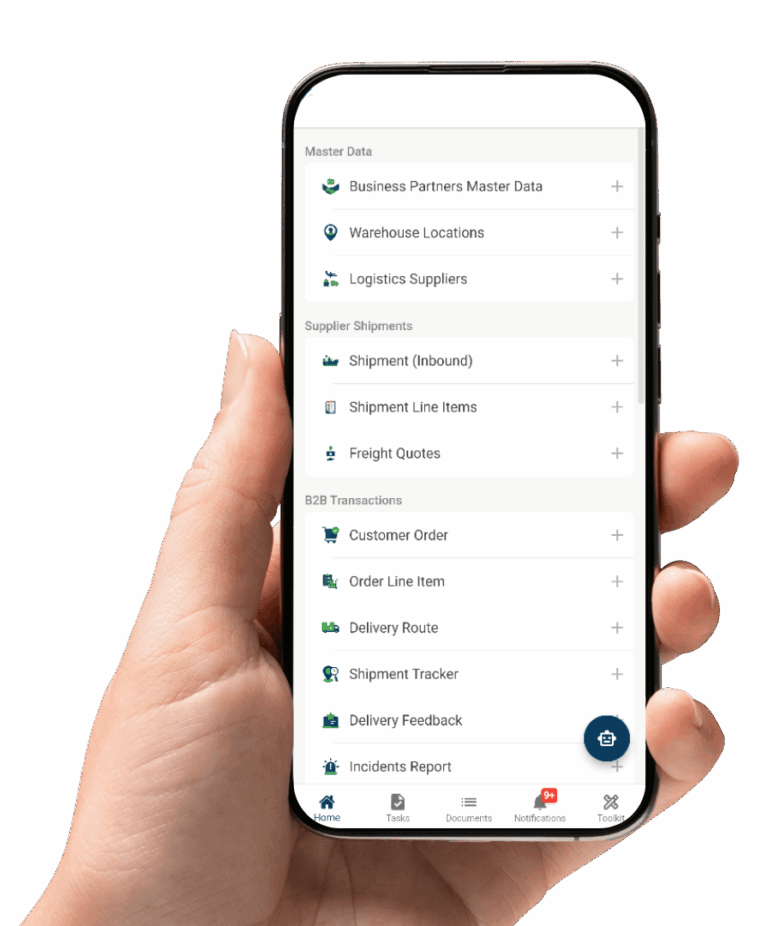
No-code workflow and operational governance for mid-sized B2B companies — approvals, document workflows and portals where suppliers, customers and contractors submit data and take part directly. Integrates with existing ERP/CRM or manages configured data directly. Modules cover procurement, CRM and sales, HR, B2B distribution, franchise and multi-branch operations, and energy and utilities.
Delivered through business analysis, configuration and testing — better suited to governed operational processes than a team wanting to self-activate a single workflow immediately.
Decisions / ProcessMaker
Merged November 2025 under the Decisions brand — process automation, enterprise rules, integrations, app development and AI orchestration for governed, cross-system processes.
That breadth can be more than a straightforward approval replacement requires.
Pipefy
AI-enabled no-code workflow platform — forms, portals, applications, analytics — for teams building and adapting structured requests and service workflows.
Confirm governance, integration requirements, plan limits and implementation support for broader, multi-function rollouts.
Appian
Enterprise low-code platform for process automation and application development, with dedicated governance — suited to substantial applications or complex process solutions.
For a mid-sized buyer replacing a limited set of approvals, may be a larger platform and delivery commitment than the requirement needs.
How the main Nintex alternatives compare
These six overlap but differ in emphasis. Power Automate is closely aligned with Microsoft ecosystems. Kissflow and Pipefy emphasise no-code workflow and application configuration. Decisions and Appian offer broader low-code process, application and enterprise orchestration capabilities. Mobbiz combines configurable workflows, portals and implementation support for operational processes that may cross organisational boundaries.
| Platform | Best for | Who builds workflows | Existing-system integration | External user portals | Main limitation |
|---|---|---|---|---|---|
| Platform Nintex (incumbent) | Best for Workflow, forms and documents | Who builds workflows Business and IT teams | Existing-system integration Yes | External user portals Product-dependent | Main limitation Product mix and licensing vary |
| Platform Kissflow | Best for Business-owned workflows and apps | Who builds workflows Business users with IT governance | Existing-system integration Yes | External user portals Yes | Main limitation Validate edition, governance, scale |
| Platform Power Automate | Best for Microsoft 365 and Power Platform | Who builds workflows Both | Existing-system integration Yes | External user portals Separate Microsoft products | Main limitation Capabilities and licences span products |
| Platform Decisions / ProcessMaker | Best for Process, rules and AI orchestration | Who builds workflows Business users and IT | Existing-system integration Yes | External user portals Project-dependent | Main limitation More platform than simple approvals may need |
| Platform Pipefy | Best for No-code workflows, forms, requests | Who builds workflows Business users with IT governance | Existing-system integration Yes | External user portals Yes | Main limitation Validate governance and plan fit at scale |
| Platform Appian | Best for Complex process and app development | Who builds workflows Low-code development teams | Existing-system integration Yes | External user portals Yes | Main limitation Larger commitment for narrow approval scope |
| Platform Mobbiz Solutions | Best for Governed workflows with external participants | Who builds workflows Mobbiz plus configured business users | Existing-system integration Yes | External user portals Yes | Main limitation Includes analysis and implementation |
Pricing is deliberately not a column here because vendors use different metrics, including users, applications, processes, capacity and transactions, and package integrations, portals and implementation differently. Ask each vendor for a quote against the same workflow scope, user volumes, external participation and integration requirements.
Why teams look for a Nintex alternative
Teams commonly evaluate Nintex alternatives around three questions: how licence cost changes at renewal or as user counts grow, who can make routine workflow changes, and whether the platform can support processes that extend beyond internal forms and approvals. These factors should be assessed against the current Nintex agreement and the scope of the processes being considered for migration.
Cost at renewal
The useful comparison is total annual cost at current and expected scale — platform licences, add-ons, implementation or partner support, premium connectors, internal admin — against the number and importance of workflows actually in use. Your real number: annual licence + add-ons + partner spend over 12 months, divided by workflows actually in use. That's what a replacement has to beat.
Dependency on IT
The time between a requested routing change and that change going live. Ask any alternative: who, by job title, can change a routing rule, what governance applies, and what has to happen before it's live? If every routine change still needs a ticket and an external partner, the replacement may not resolve the ownership issue.
Processes that outgrow forms
A platform adopted for internal forms may later be asked to handle supplier onboarding, contractor documents, and franchise or multi-branch operations — needing external-participant access, document collection, expiry tracking and cross-organisation approval routing.
What to check before you migrate off Nintex
Audit four things. They drive project size, sequencing and migration effort.
Count the workflows that actually run
Pull usage data, not just the workflow list — older estates often contain inactive workflows. Live count, weighed against criticality, complexity and volume, is more useful than the total for sizing the project.
Locate documents and templates
Identify every generated template, the formats produced, and where output is stored. Decide early whether historical documents move with you or stay archived in place — rebuilding templates is predictable work, discovering them mid-project isn't.
Map the integration points
List every system Nintex reads from or writes to — ERP, CRM, HR, finance, Microsoft services. For each, establish whether the replacement connects via a standard API/plugin or needs a build.
Confirm approval authority and audit history
Document who approves what, at which thresholds, under which delegation rules. Decide whether historical approval records need to migrate, or can stay in an accessible archive that meets legal and audit requirements.
How the sequencing usually goes
A mid-sized distributor lists roughly 40 Nintex workflows. Usage data shows 12 running in any given month, 4 of those accounting for most of the volume. Rather than a full cutover, the team migrates supplier onboarding and distributor workflows first — clearest owner, most manual chasing, no dependency on other processes. Nintex keeps running everything else. Once that's stable and the ERP integration is proven, the next process family follows, and the Nintex licence is reduced at the following renewal rather than cancelled on day one. This is a typical sequencing pattern, not a specific engagement — migrate the process with the clearest owner and the worst manual overhead first, and keep the incumbent running until the replacement is proven.
What implementation costs with Mobbiz Solutions
Existing Nintex workflows are assessed during business analysis and reconfigured in Mobbiz rather than migrated automatically — workflow count, complexity, integrations and historical-data requirements drive the estimate.
Implementation
From $6,000 for a pre-configured module; bespoke, client-specific work from $12,000; higher-complexity, multi-module projects can exceed $25,000.
Internal licences
Generally $13–$20 per user per month depending on location and volume, with a 20-user minimum commitment.
External users
Standard packs from $250/month for up to 250 users, additional packs from $150/month. Larger volumes may qualify for lower rates; transaction-based pricing available where a pack model doesn't fit.
AI agents
Optional configuration from approximately $300 per use case, usage billed separately.
These are Mobbiz Solutions figures. Nintex pricing varies by product and agreement and should be confirmed directly with Nintex before use in a replacement business case.
When Mobbiz Solutions is not the right Nintex alternative
Microsoft 365-only estate
If Nintex use is limited to document generation and approvals within Microsoft 365, Power Automate and related tools may fit more naturally and could cost less.
Same-day self-service need
Mobbiz is built for implemented business processes, not activating a single self-service workflow immediately.
Full ERP replacement
Not intended to replace the full finance, accounting, inventory and operational scope of an ERP, though it integrates with existing systems and can manage configured modules.
Best-fit geography
Strongest markets are Spain and the rest of Europe, the Philippines, Singapore and Southeast Asia, with the UK and Australia served secondarily.
What each stakeholder needs to see
Operations
The workflow count and the change process — who edits a rule, and how fast.
IT
The integration list, and where data sits relative to existing systems.
Finance
The implementation range, licence model, minimum commitment, and how the incumbent licence is treated during a phased migration.
Frequently asked questions
What are the best Nintex alternatives?
Frequently considered alternatives to Nintex for approvals and document workflows include Kissflow, Microsoft Power Automate, Decisions following its merger with ProcessMaker, Pipefy, Appian and Mobbiz Solutions. Power Automate is closely aligned with Microsoft 365; Kissflow and Pipefy emphasise no-code workflow configuration; Decisions and Appian support broader low-code process and application development; Mobbiz Solutions suits companies whose approvals and operational workflows extend to suppliers, contractors and branch operations, while integrating with existing systems or managing configured operational data directly.
Why do teams switch away from Nintex?
Teams commonly evaluate a switch because of licence cost at renewal or as user counts grow, dependence on IT or an implementation partner for routine changes, or processes extending beyond the original forms-and-approvals scope. The business case should test all three against the current agreement and migration requirements.
What should you check before migrating off Nintex?
Audit four things: the number of workflows genuinely in active use as shown by usage data rather than only the workflow list, where document templates and generated output are stored, every system Nintex reads from or writes to, and who holds approval authority at each step. Then decide whether historical approval records need to migrate or can remain in an accessible archive that meets legal, audit and operational requirements.
Is Microsoft Power Automate a direct Nintex replacement?
For Nintex estates focused on SharePoint and Microsoft 365, Power Automate is a logical option to assess because it works within the same ecosystem and some standard cloud-flow capabilities may already be covered by Microsoft 365 licences. A complete solution may span Power Automate, Power Apps, Dataverse and SharePoint, with premium connectors and other capabilities licensed separately.
How long does a Nintex migration take?
Timeline depends on the number and complexity of active workflows, integrations, document templates, testing and historical-data requirements. A phased approach can migrate one process family first while the incumbent platform continues running the remaining workflows, reducing cutover risk and allowing licence changes to follow the proven migration sequence.
What does Mobbiz Solutions cost compared with Nintex?
Mobbiz Solutions implementations start at USD 6,000 for a pre-configured module or industry solution, while bespoke implementations start at USD 12,000; higher-complexity projects can exceed USD 25,000. Internal licences generally range from USD 13 to USD 20 per user per month, depending on client location and volume, with a minimum 20-user commitment. External access can use lower-cost packs, volume-adjusted rates or transaction-based pricing. Optional AI agents are priced separately, and integrations are always scoped and priced separately whether included initially or in a later phase. Nintex pricing varies by agreement and should be confirmed directly with Nintex. For a fair comparison, calculate the annual total including add-ons and partner fees against the workflows actually in use.
Can Mobbiz Solutions include external users like suppliers and contractors?
Yes. Mobbiz Solutions provides portals through which external users including suppliers, customers and contractors submit data, upload documents and participate in workflows without being internal system users. Standard external-user packs start at USD 250 per month for up to 250 users, with additional packs from USD 150 per month. Larger volumes may qualify for lower effective rates, and transaction-based pricing is available when a user-pack model is unsuitable. This is one reason Mobbiz appears on shortlists for procurement, B2B distribution, and franchise and multi-branch operations, where workflows cross organisational boundaries.
How much efficiency improvement should we expect?
Mobbiz Solutions implementations typically target operational savings of approximately 20 to 40 percent within the first six months of use. This is not a guaranteed result: actual outcomes depend on the starting point, process design and implementation scope. Heavy re-keying and manual chasing tend to improve most, and already partly automated processes tend to improve least.
See how your workflows would run on Mobbiz
Bring your user counts, operating region, and the process causing the most manual chasing — leave with a real number, not a category range.
Email: info@mobbizsolutions.com