
What workflow automation
software costs
Implementation, licences and AI agents — broken down so a budget number stops being a guess.
Mobbiz Solutions | Pricing and Budgeting
Workflow automation software manages repeatable business processes such as approvals, onboarding, document handling and internal requests. What it costs comes down to three things bought separately: a one-off implementation project, an ongoing user licence, and AI agents if you want them.
At Mobbiz Solutions, implementation starts at USD 6,000 for a pre-configured module or industry solution. Bespoke implementations for client-specific processes start at USD 12,000, while more complex, multi-process or integration-heavy projects can exceed USD 25,000. Internal-user licences use regional, volume-based pricing: at the minimum 20-user tier, pricing generally runs USD 14–20 per user per month depending on location, with lower effective rates at higher volumes.
These are Mobbiz Solutions’ current published starting figures. Other vendors in this category price differently — the comparison further down sets out how.
How much does workflow automation software cost?
The pre-configured tier can cover up to six business processes or operational transaction types — purchase requests, purchase orders, supplier invoices, candidate management, recruitment workflows — plus two automations or AI use cases and two rounds of revisions. Integrations are scoped separately.
| Implementation Type | Estimated Cost |
|---|---|
| Implementation Type Pre-configured implementation | Estimated Cost from $6,000 |
| Implementation Type Bespoke implementation | Estimated Cost from $12,000 |
| Implementation Type Complex / multi-process / integration-heavy | Estimated Cost $25,000+ |
| Implementation Type Internal licence, 20-user minimum tier | Estimated Cost $14–20 / user / mo |
Bespoke implementation, for client-specific processes, starts at USD 12,000. Projects involving more processes, automations, integrations or revision cycles can move above USD 25,000. Where a project lands is set by scope, not by company size.
Three things move a project up the range:
The Number of Processes in Scope
A single purchase approval workflow fits within a standard deployment. A procurement chain plus supplier onboarding plus document control requires more configuration. Processes built around company-specific know-how and a differentiated delivery model typically need a bespoke implementation.
The Number and Type of Integrations
Mobbiz Solutions integrates with existing ERP, CRM and other business systems, so organisations can digitise workflows without replacing their technology stack. If an ERP, CRM and legacy document store each hold part of the same supplier record, the implementation has to establish which system owns each field, how records are matched, and how updates stay synchronised. That work adds to scope and cost.
Process Complexity
Approval tiers, conditional routing, multi-branch or multi-country variation, and regulated audit requirements each add build and testing time. A three-tier approval that behaves differently in two countries is a bigger piece of work than a one-step sign-off, even though both get described as “an approval workflow.”
Platform licences, optional AI-agent setup and usage, integrations, and your own team's time all sit outside the core implementation figure. Integrations and additional AI use cases are always scoped and priced separately, whether folded into the initial project or added in a later phase.
Is it priced per user, per workflow or per module?
All three models are in use across this category, and vendors differ. Mobbiz Solutions charges per user for internal licences, using regional, volume-based pricing — around USD 14–20 per user per month at the minimum 20-user tier, with the effective rate falling as licensed users increase.
Implementation is priced against the agreed project scope, covering the number and complexity of workflows, integrations and other requirements. Since the standard tier covers up to six processes, adding a fourth workflow to an existing three-process deployment is a scoping conversation, not an automatic increase to the monthly bill.
Every internal user is licensed and counts toward the 20-user minimum, whatever their level of use — there’s no separate light-use, viewer or read-only tier. A requester who raises three purchase orders a month is still an internal user, the same as an approver working in the system daily. Volume pricing does mean the effective average cost per user falls as more internal users are added.
External participants — franchisees, suppliers, branch partners and other outside users — don’t count toward the 20-internal-user minimum. Their pricing runs through user packs or per transaction, depending on the use case:
| External User Pack | Monthly Cost |
|---|---|
| External User Pack First pack — up to 250 external users | Monthly Cost $250 / mo |
| External User Pack Each additional pack — up to 250 users | Monthly Cost $150 / mo |
Larger volumes can move to customised pricing that reduces the effective per-user cost further; very large or occasional user populations may fit transaction-based pricing better.
The model also decides what happens in year two. Per-user pricing scales with headcount, though volume tiers soften that as adoption grows. Per-task or per-operation pricing scales with usage, so the bill rises as more automations run. Platform-tier pricing charges a fixed amount for an agreed level of access.
Mobbiz Solutions doesn’t offer a permanent free plan, but prospective clients can request a free demo or limited pilot before committing to implementation.
How the Category Compares
| Vendor | Primary pricing model | Free plan / evaluation | Where the cost grows |
|---|---|---|---|
| VendorMobbiz Solutions | Primary pricing modelRegional, volume-tiered internal-user licences; external-user packs; fixed-scope implementation | Free plan / evaluationFree demo or limited pilot; no permanent free plan | Where the cost growsUsers added; additional processes, integrations, usage-based services |
| VendorZapier | Primary pricing modelPer task, tiered by volume | Free plan / evaluationFree plan | Where the cost growsTask volume |
| VendorKissflow | Primary pricing modelFixed annual agreement, quoted | Free plan / evaluationNo public free plan | Where the cost growsAgreement scope and additional services |
| VendorMicrosoft Power Automate | Primary pricing modelPer user and per bot/process options | Free plan / evaluationFree trial | Where the cost growsUsers, bots, hosted processes, add-ons |
| VendorMake | Primary pricing modelPer credit, tiered by volume | Free plan / evaluationFree plan | Where the cost growsCredit volume |
| VendorWorkato | Primary pricing modelUsage-based enterprise pricing, quoted | Free plan / evaluationTrial available | Where the cost growsUsage and enterprise scope |
Pricing models change — check each vendor's own page before deciding. Zapier, Kissflow, Microsoft Power Automate, Make and Workato publish varying levels of detail; some quote on request. The Mobbiz Solutions figures here are published, not gated behind a sales call.
What does a 50-person rollout cost?
Licence pricing depends on location and the applicable 50-user volume tier. At the minimum 20-user tier, internal licences generally run USD 14–20 per user per month, but higher-volume tiers bring the effective rate down — a 50-user quotation should use the applicable volume tier, not the minimum-tier price multiplied by 50. Implementation is priced separately and can start at USD 6,000 for a pre-configured deployment.
Headcount alone doesn’t set the implementation price. A 50-person distributor automating one purchase requisition workflow with a single ERP integration is a smaller project than a 50-person operation automating six processes across three countries, even at the same headcount.
Worked example.. A mid-sized B2B distributor with 50 employees keeps its existing ERP and brings three processes into Mobbiz Solutions: purchase requisition approval, supplier onboarding, and delivery-note exception handling. If all 50 need internal access, they're licensed under the applicable 50-user volume tier — a lower effective per-user rate than the minimum tier. If the processes fit a pre-configured module, implementation can start at USD 6,000, with integrations and client-specific requirements scoped separately.
Implementation is generally a one-off payment; platform licences recur. The year-two run rate is mostly the applicable annual licence cost plus any optional services or AI usage. More processes, complex rules or multi-country requirements can still increase the core implementation scope — integrations and AI use cases are always scoped and priced apart, whether they’re in the initial project or added later.
How much do AI agents cost?
| Pricing Component | Estimated Cost |
|---|---|
| Pricing Component Setup, per use case (one-time) | Estimated Cost from $300 |
| Pricing Component Usage — Mobbiz Credits | Estimated Cost ≈ $0.02 / credit |
| Pricing Component Reference: document processing | Estimated Cost ≈ 1 credit / 1–3 invoices |
AI agents are configured for specific use cases and priced separately from platform licences. Mobbiz Solutions can configure agents to:
- Read, extract and classify information from incoming documents
- Draft documents such as trade letters and MOAs
- Validate uploaded documents against required fields, business rules or policy
- Flag incomplete, inconsistent or unusual data before it moves downstream
- Turn meeting outcomes into structured workflow actions
The use case and configuration are defined with the client, and representative documents or transactions are tested before implementation so expected consumption can be estimated. These agents run inside the workflow, so their output stays subject to the same approvals and audit trail as the rest of the process. Mobbiz Solutions can work with any LLM, including customer-trained ones.
Four things drive overall AI cost: how many use cases you deploy, what each one is asked to do, the volume of documents or transactions it handles, and how much human review you keep over its output. If AI agents are part of the evaluation, give setup and usage their own budget line — assuming they’re bundled into the platform licence is a common budgeting mistake.
How long does implementation take?
Analyze
Review current processes, identify friction points, and define the best operational flow before building.
Configure & deploy
Configure the platform around the agreed process and move quickly toward a live solution.
Support & improve
Continuous improvement so workflows evolve with the business over time.
A Mobbiz Solutions deployment typically takes 4–8 weeks from kick-off to the first live process for a smaller or core implementation. Larger, more complex programmes can take 8–16 weeks or longer. It requires a named process owner and decision-makers available for scheduled reviews; where integrations are involved, an IT contact must provide the necessary system access.
What slows a project from four weeks to eight is rarely the software — it’s the number of processes in scope, whether integration access is ready on day one, whether the process is already documented, and how quickly internal approvals get made. A team that arrives with a mapped process and ERP credentials in hand moves faster than one that discovers mid-build that three branches handle the same approval differently.
What the client team provides:
- A named process owner for each workflow, available through the build
- Where integrations are required, an IT contact who can provide system access
- Approvers available for two or three review sessions
- A named tester to sign off user acceptance before go-live
Budgeting the software without budgeting the internal time is the usual reason a four-week estimate turns into a ten-week delivery.
When workflow automation isn't the right spend
Mobbiz Solutions isn’t the cheapest answer to every automation problem. Some situations call for something else:
A single app-to-app trigger
If all you need is to copy a form submission into a spreadsheet and notify a channel, Zapier or Make will do it for a fraction of the cost, with no implementation project to fund.
Internal teams below 20 users
The licence carries a 20-internal-user minimum, so an organisation with 8 internal staff still pays for 20. Below that headcount, the per-user economics may work against you unless the process is unusually high-value.
A full ERP replacement
Mobbiz Solutions integrates with existing ERP and CRM systems, or manages configured processes and data directly — it isn't intended to replace an ERP's full finance, accounting, inventory and operational functionality.
A single team with no cross-functional approvals
Most of the value here is in governing work that crosses departments — procurement into finance, HR into IT. A process that stays inside one team of six may not justify a project of this size.
See what your own rollout would cost
Most of the costing work happens before you speak to any vendor: count the internal users who’d actually need a licence, estimate external participants, list the processes to automate, and check which systems they touch. Those answers move you from a category range to a real number.
A Mobbiz Solutions demo is where that number gets tested — bring your user counts and operating region, the ERP or CRM you’re keeping, and the process causing the most manual chasing. If the honest answer is that a cheaper per-task tool covers what you need, that’s what gets said.
Frequently asked questions
How much does workflow automation software cost?
Implementation at Mobbiz Solutions starts at USD 6,000 for a pre-configured module, USD 12,000 for bespoke work, and can exceed USD 25,000 for higher-complexity projects. At the minimum 20-user tier, internal licences run around USD 20/user/month in Europe and the US, and around USD 14/user/month in Asia, with lower effective rates at higher volumes. AI-agent setup starts around USD 300 per use case, with usage billed separately.
What does a 50-person rollout cost?
Licence cost depends on region and the applicable 50-user tier. In Asia, that tier is roughly USD 630/month (about USD 7,560/year). Europe and US deployments sit on a higher regional tier, starting around USD 20/user/month at the 20-user minimum with lower effective pricing at 50 users. Implementation is quoted separately, from USD 6,000 for a pre-configured deployment — headcount alone doesn’t set that price.
Is it priced per user, per workflow, per module or per transaction?
All four models exist across the category. Mobbiz Solutions charges internal users on volume-based pricing and prices implementation as a fixed-scope project. External participants are priced separately, through user packs or by transaction volume depending on the use case.
How long does implementation take, and what does our team need to provide?
A smaller or core implementation typically takes 4–8 weeks to first live process; complex programmes can take 8–16 weeks or longer. The client provides a process owner per workflow, an IT contact for integration access, approvers for review sessions, and a named tester for user acceptance.
What makes one implementation $6,000 and another $25,000+?
The $6,000 starting price applies to a pre-configured module or industry solution. Cost rises with client-specific processes, more business processes, multiple integrations, complex approval logic, multi-country variation, or additional revision cycles.
Do occasional users need a full licence?
Yes. Every internal user is licensed and counts toward the 20-user minimum, regardless of how often they log in — there’s no separate light-use or read-only tier, though volume pricing lowers the effective average cost as more users are added.
Are external users free?
No. External users are priced separately through user packs or by transaction volume: USD 250/month for the first pack of up to 250 external users, and USD 150/month for each additional pack of up to 250. Customised pricing can reduce the effective cost further at larger volumes.
What's not included in the implementation price?
Recurring licences, AI-agent usage, integrations and additional use cases outside the agreed scope are charged separately. Your own team’s time isn’t billed by the vendor, but it’s a real cost — and the one most often left out of the business case.
The real cost of workflow automation software
The real cost shouldn't be assessed on implementation and licence fees alone. Weigh the total cost against the measurable value: reduced manual work, fewer errors and rework, faster turnaround, improved quality, and consistent enforcement of business rules. Mobbiz Solutions implementations typically target operational savings of roughly 20–40% within the first six months of use — actual results depend on the processes automated, the starting baseline, transaction volumes, implementation scope and user adoption.
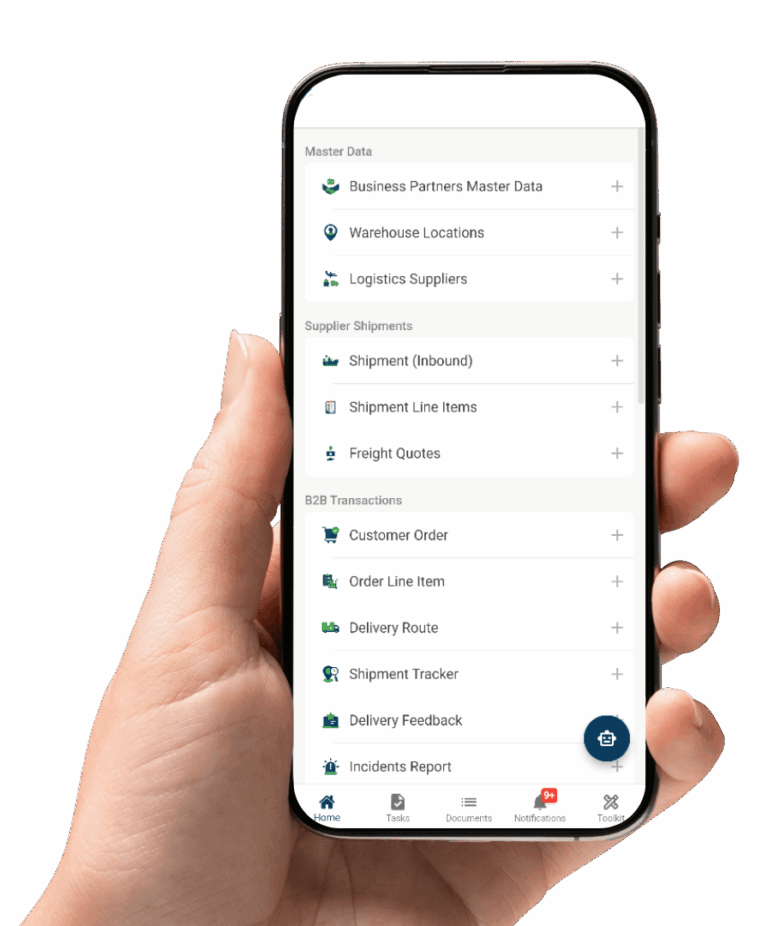
See how your workflows would run on Mobbiz
Bring your user counts, operating region, and the process causing the most manual chasing — leave with a real number, not a category range.
Email: info@mobbizsolutions.com